

Current issue: Connecting decarbonization and urban justice in cities
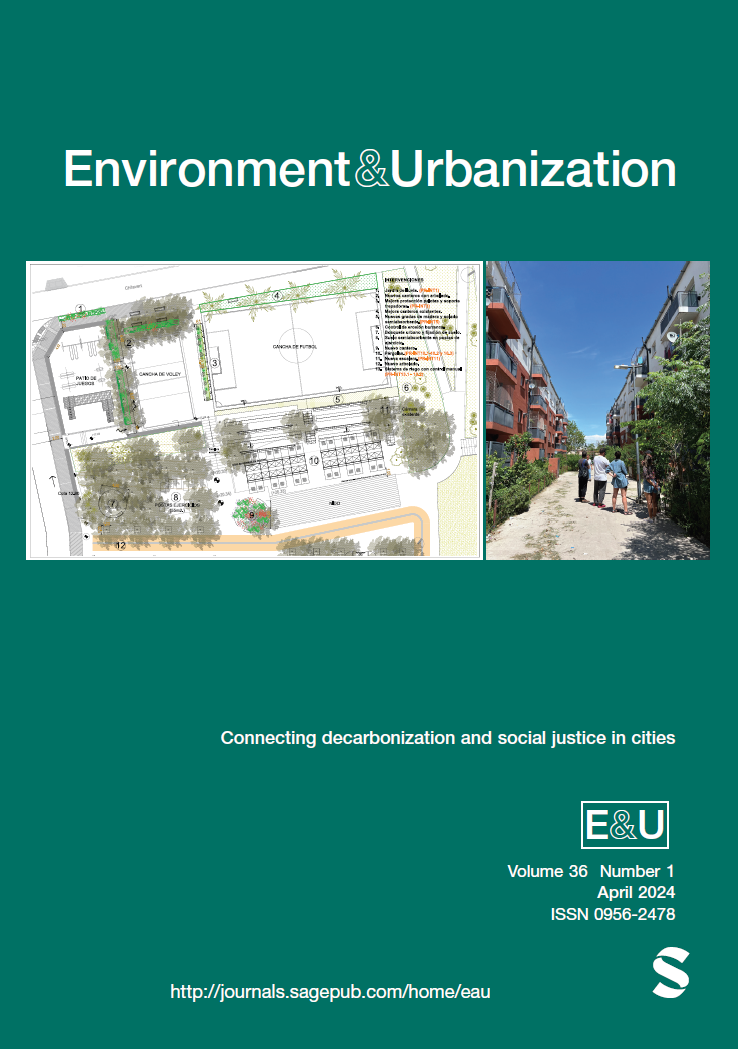
This issue seeks to expand understanding of how climate change mitigation policies and practices can align with the imperative to secure social justice in cities and to support the agendas of urban social movements.
Bringing together papers that respond to gaps in knowledge around the links increasingly being made between decarbonization and social justice in cities, it offers empirical research and practical knowledge about grounding climate justice in low-income and informal settlements. The issue seeks not to supplant adaptation priorities for low-income and marginalized communities living on the front line of climate change, but rather to explore and demonstrate how decarbonization as a process of mitigation is an essential component for efforts to achieve urban climate justice and climate-resilient development.
Areas of exploration include the engagement of low-income communities in Lagos, Nairobi and Johannesburg in local infrastructural development; social movements focused on housing occupations in São Paulo, Natal and Johannesburg; waste pickers’ knowledge and practice around climate action in Brazil; household waste management practices in Santiago de Cali and their implications for municipal ‘zero waste’ projects; the shortcomings of ‘green’ infrastructural investment in Guangzhou; the impact of municipal green bonds in San Francisco, Mexico City and Cape Town; and the promise of Urban Labs as an alternative governance arrangement that could provide innovative solutions to non-linear challenges such as climate change.
View full contents and access papers in this issue
October 2023: Rethinking urbanization and economic development
This issue explores new perspectives on the links between urbanization and economic development.
It brings together papers tackling the measurement of urban growth in Africa; land value capture in South Korea; links between the built form of unplanned settlements and socioeconomic status in Mozambique; the effect of property rights on income generation in Angola; connections between informal settlement dwelling and running informal enterprises in Indonesia; and the linking of existing research on entrepreneurship and business studies with urban geography.
Together, the papers help to demonstrate the complexity of the relationship between urbanization and economic development – not one of automatic or inevitable effects or outcomes, but of interdependence, in which the two are closely entwined and shaped by one another.
The issue also contains six diverse Feedback papers. These include papers on: tactics for thinking globally about development; an exploration of energy injustice and resilience in low-income settlements in Peru; a critical analysis of the participatory processes employed in developing plans for informal settlements in Mukuru; the critical importance of programme learning in upgrading programmes; post-conflict statecraft in Somaliland; and the growing urbanization of deltas, underscoring how effective, equitable planning is needed to mitigate future climate-related catastrophes.
View full contents and access papers in this issue

April 2023: Addressing urban inequalities II: discursive and material practices through scale
This issue pairs research from sites in Dar es Salaam, Dhaka, Harare, Lilongwe, Lima and Mumbai with analyses of policies relating to climate-impacted dwellers in urban Bangladesh, to state-provided housing in South Africa and to the framing of ‘slums’ in global policy discourses. Running through each of these papers is a focus on the discursive and material practices at different scales that can reinforce inequalities – but that when co-produced with the aim of fulfilling the rights of urban residents, can also construct and reproduce pathways to urban equality.
The issue’s Feedback papers include a field note that explores a Chennai fishing community whose hamlet has been engulfed by the growing city, showcasing their resistance to fish vendors being further uprooted and the effectiveness of the local hamlet council in asserting its land claims. A second field note brings to attention the collaborative actions undertaken by waste picker organizations in Brazil during the COVID-19 pandemic and their part in a social movement looking to tackle social and economic inclusion. Two research papers complete the Feedback section – a first examines the role of funds-based mechanisms for addressing urban climate change adaptation and proposes a conceptual framework for evaluating urban responses that focuses on the complexity, uncertainty, vulnerability and transformation needs of urban adaptation; a second, looking at community toilet provision in unserved informal settlements in India, draws attention to a mismatch between the perceptions of state and citizens of sanitation infrastructure.
View full contents and access papers in this issue
 cover image.png) October 2022: Addressing urban inequalities I: Co-creating pathways through research and practice - reframing trajectories, politicizing knowledge and transforming pedagogies
October 2022: Addressing urban inequalities I: Co-creating pathways through research and practice - reframing trajectories, politicizing knowledge and transforming pedagogies
This issue brings together papers from sites of action in Mumbai, Freetown, Dar es Salaam, Johannesburg, Rio de Janeiro, Cali, and networks in Latin America & Asia. The papers share original research, practices, experiences and theoretical reflections about the construction of pathways towards urban equality. Although operating in distinctive and diverse ways and sites, these pathways all invite us to reflect on the ways in which the different dimensions of urban equality are advanced, and to interrogate both urban planning practices and knowledge production processes. Some of these papers were produced under the international research programme Knowledge in Action for Urban Equality (KNOW), which reinforces an overall focus in this issue on questions of the co-production of actionable and transformative knowledge.
The issue also contains four Feedback papers. These include a field note that follows previous research on the impact of the COVID-19 pandemic’s first wave for residents of “slum” settlements in Bengaluru and Patna, India, exploring the impact of the second wave and the differences over time. A second paper examines the impact of the pandemic from a global perspective, identifying emerging trends in the responses of local city governments and speculating on some likely outcomes. The second two papers offer fresh perspectives: one, from Iran, by focusing on the views of urban planning professionals on children’s participation in local planning; another, from Kampala, through documenting internal divisions within a civil society partner involved in a settlement upgrading co-production initiative.
View full contents and access papers in this issue
April 2022: The contribution of cities to local and planetary health - equity, ecosystem services and nature
 cover image_resized.png) This special issue examines the contributions that cities make to local and planetary health at a time when an ever-growing share of the world’s population primarily encounters nature within the city. Diverse case studies explore questions of what nature looks like in the city and who it is there to serve. These span a wide array of cities and biomes – from the lakes of Bengaluru, to the floodplains of Khon Kaen, the forests of Obafemi-Owode, the parks of Johannesburg, the orchards of Shenzhen and the wetlands of Kolkata – drawing out the intersections between social and environmental goals in the study of urban socio-ecological systems.
This special issue examines the contributions that cities make to local and planetary health at a time when an ever-growing share of the world’s population primarily encounters nature within the city. Diverse case studies explore questions of what nature looks like in the city and who it is there to serve. These span a wide array of cities and biomes – from the lakes of Bengaluru, to the floodplains of Khon Kaen, the forests of Obafemi-Owode, the parks of Johannesburg, the orchards of Shenzhen and the wetlands of Kolkata – drawing out the intersections between social and environmental goals in the study of urban socio-ecological systems.
Three Climate Change in Cities papers explore primary literature on the impacts of flooding, extreme temperatures, droughts, and storms on health in informal settlements; show the importance of patient, participatory, and people-centred approaches to disaster recovery in the urban centres of Fiji, the Solomon Islands and Vanuatu; and suggest how resilience research can advance rights and justice. Two Feedback papers explore the comparative effects of COVID-19 on urban settlements – the first in Patna and Bengaluru; the second in three neighbourhoods of Bueno Aires. A third Feedback paper examines how strategies and mechanisms used in a programme in Rosario, Argentina can realise a multiscalar approach to citizen participation in planning.
View full contents and access papers in this issue
October 2021: Citizen participation in planning: from the neighbourhood to the city
 This issue explores how residents attempt to shape their cities, including the structures and obstacles to doing so. The diverse case studies cover a Roma settlement in Serbia; the legacies of participatory planning in Havana; urban poor networks in Dhaka; planning for green space in Kumasi; a special planning area in Nairobi; community water projects in northern Pakistan; urban policy councils in Brazil; and a former informal settlement in Mexico City. The more general papers explore how participatory budgeting is being applied to climate change projects, how design is intersecting with participatory methods, and how the discipline of planning itself could embrace queer thinking.
The Climate Change in Cities papers examine the adaptation strategies of two Asian communities: riverside slum households in Phnom Penh and resettled households in Chennai. One Feedback paper covers inclusive recycling movements; the other analyses critical junctures in disaster risk management in Manizales.
View full contents and access papers in this issue
April 2021: Education and learning for inclusive development
 This issue explores education in urban areas, which has a major, complex role in promoting both inclusive development and social exclusion. The papers that focus on education as a driver of inclusive development address childcare services for informal female workers; a massive open online course on water and sanitation in lower-income areas; a school merger in Kingston, Jamaica; and responsive architectural education in Jhenaidah, Bangladesh. Meanwhile, the papers that tackle education’s role in fostering inequality examine the shadow education system in China; the exclusion of migrant students in Beijing; and the challenges of accessing education during the COVID-19 pandemic in Harare, Zimbabwe.
The Climate Change in Cities paper looks at how flooding and extreme heat affect water and electricity services in Accra and Tamale, Ghana. The Feedback papers are dominated by coronavirus, addressing gaps in discussions of the pandemic; spatial modelling of COVID-19 mortality rates in São Paulo; the pandemic’s impact on food security in Mongla and Noapara; Bangladesh; and inequality of infrastructure and response capacity in South Africa. This issue also includes papers on social network analysis of informal settlements; water, sanitation and hygiene in Dar es Salaam; and family social capital across the generations in Guayaquil, Ecuador.
View full contents and access papers in this issue
October 2020: Rethinking the roles of the state and communities in urban housing and land use management II
 This is the second of two special issues dedicated to urban housing and land-use management. As with the first issue, there is a strong focus on housing inadequacy in informal settlements, as well as the roles of community groups and local governments in strengthening housing policies. Several papers on East Africa explore different facets of inclusive shelter. And two COVID-19 papers add urgency to the discussion of urban housing.
The Climate Change in Cities paper explores Durban’s experiences under the 100 Resilient Cities programme. The feedback papers tackle community fire response in Nairobi; criminal violence and electricity provision; the need for integrated research on vulnerability and resilience; and measurement of residential segregation in Chile.
View full contents and access papers in this issue
April 2020: Rethinking the roles of the state and communities in urban housing and land use management
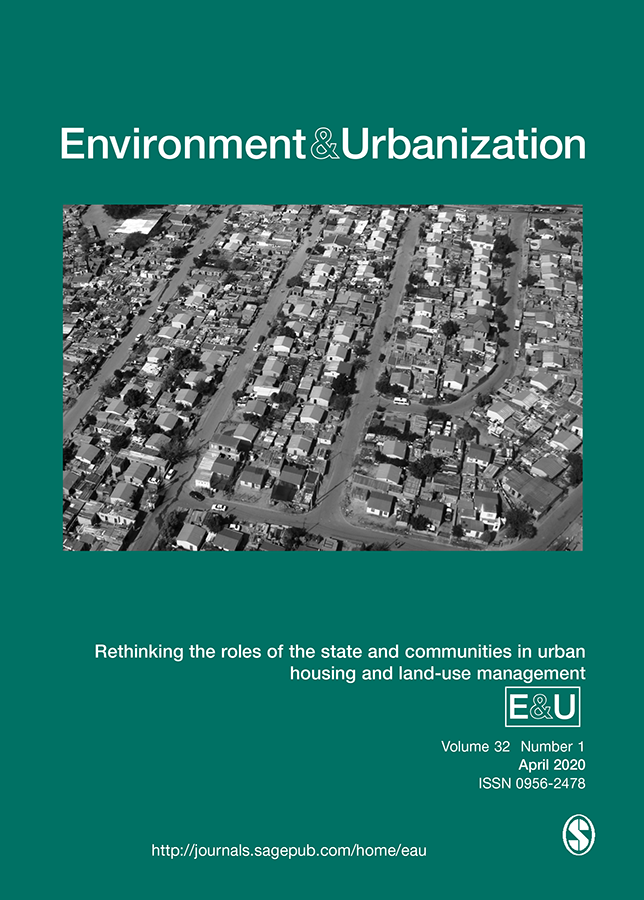 This is the first of two special issues dedicated to urban housing and land-use management. Many of the papers are concerned with informal housing, including incrementally constructed homes, upgrading of informal settlements, informal land investments, and unconventional sources of housing finance. The papers also explore competing interests in land, including local governments, national governments, social movements, real estate investors and owners, property developers, and local residents. The housing and land papers span cities in South Africa, Tanzania, Turkey, Rwanda, Ethiopia and Namibia.
The Climate Change in Cities paper explores resilience to climate hazards in smaller cities of the Amazon. The feedback papers are varied, analysing the most common risks in Ibadan, Nigeria; hospital records for understanding environmental health in Karonga, Malawi; water security in three cities of the Americas; and understanding and assessing urban extreme poverty.
View full contents and access papers in this issue
October 2019: Getting food on the table in cities
Food policy debates have become increasingly sophisticated, reaching beyond a sole focus on food security and production to questions of quality, nutrition, affordability, and inclusiveness. Yet this expansion of knowledge has not extended to urban areas. The current issue of Environment and Urbanization attempts to fill this gap with papers from Vietnam, Uganda, Canada, Haiti, Chile, Cambodia, Nepal, and Namibia. These papers address the links between urban food and community building, gender, health, livelihoods, and of course food security.
April 2019: Towards more inclusive climate change adaptation
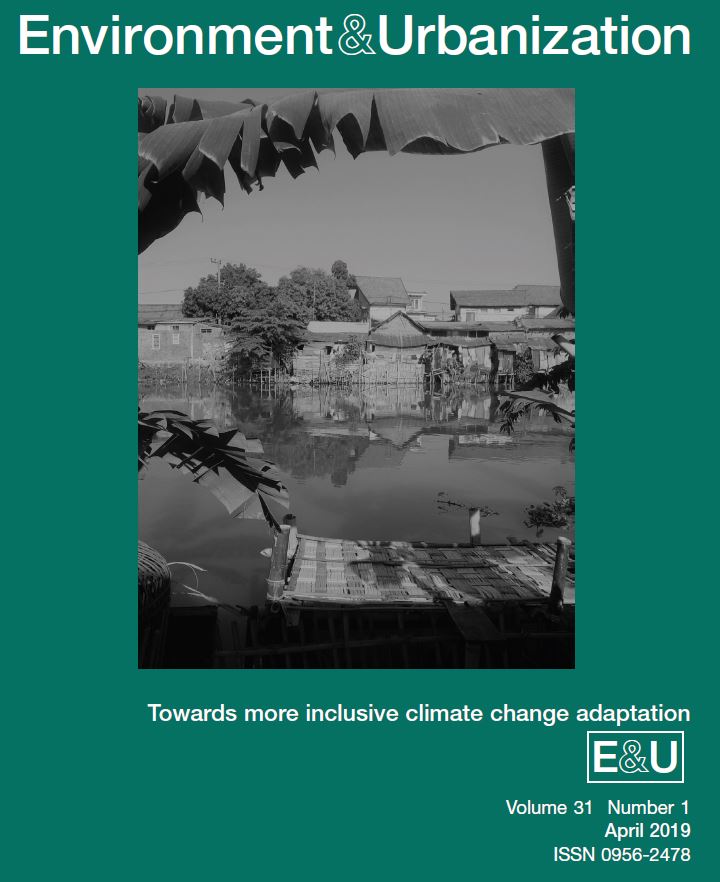 Our understanding of climate change impacts and vulnerability in urban centres has grown rapidly in recent years, as has the number of cities developing and implementing plans to respond to the challenges of climate change. The papers in this issue explore such plans and responses in a variety of contexts and scales, from transnational networks for adaptation that incorporate Indonesian cities, to urban adaptation in the Solomon Islands and Vanuatu. Several papers explore the gendered aspects of adaptation (in Dar es Salaam, Tanzania and Khulna City, Bangladesh). Another zeroes in on the way urban migrants are particularly affected in India.
A common theme is attention to the informal settlements that are particularly exposed to climate-related hazards in cities. Another theme across the papers in this issue is the need for genuinely inclusive adaptation; one paper details the participatory planning processes in three small- to medium-sized Latin American cities.
Also in this issue of Environment and Urbanization are papers on: 50 years of housing policies in Latin America; the Smart Cities craze in India; participatory slum upgrading in Afghanistan; household water consumption in Shanghai; policy pilots for co-production in four Chinese cities; the use of satellilte data to study Indian slums; sanitation bye-law enforcement in Accra; provision of basic services in Syria; and malaria in peri-urban areas of Colombia.
October 2018: Co-production: taking stock of achievements and possibilities
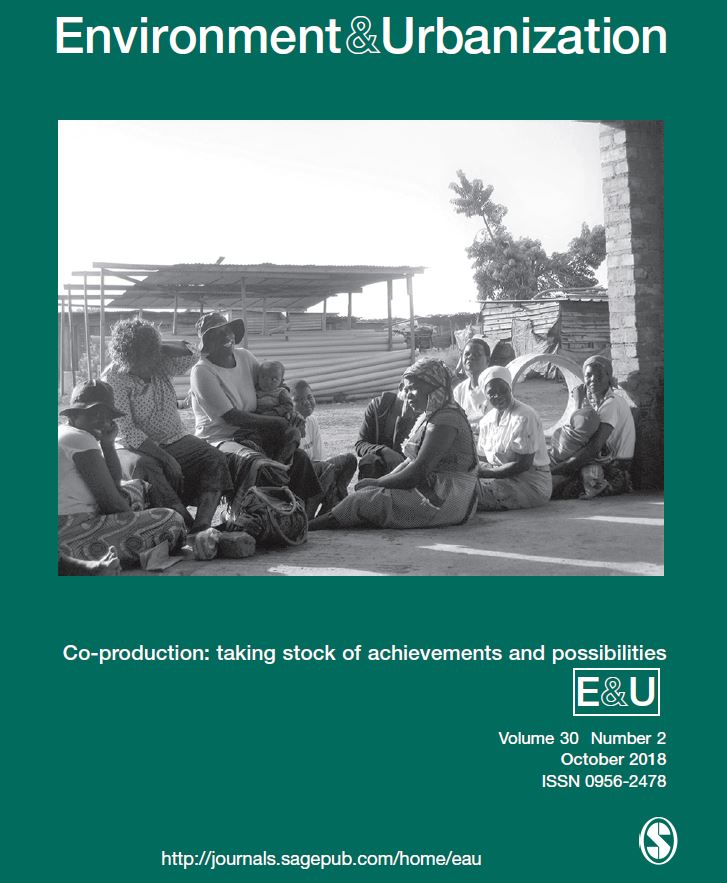 Co-production, or service delivery in partnership between citizens and the public sector, has come a long way in the decades since it was first conceptualized. In urban areas, co-production is being applied to water and sanitation provision, to post-disaster rebuilding, and to housing upgrading, among other uses.
April 2018: Local finance for local development
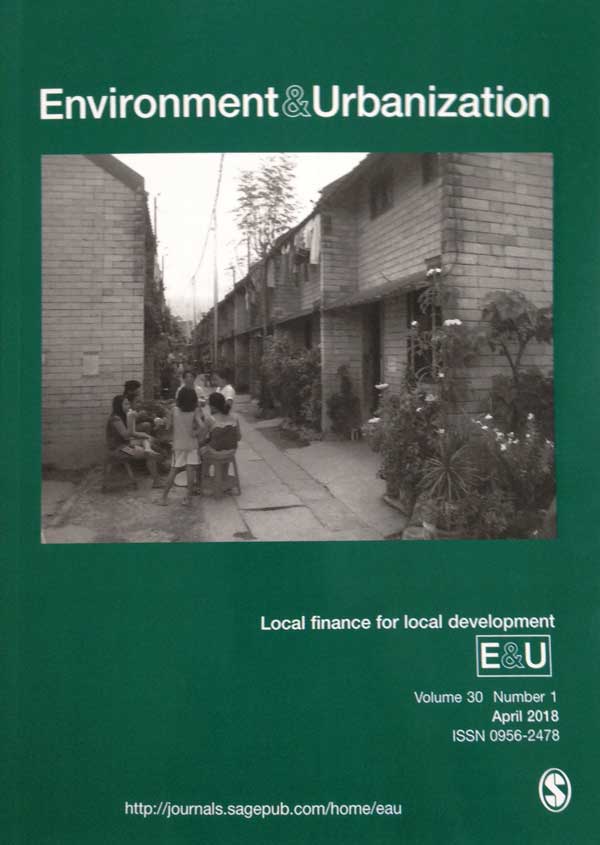 Public investment is essential for urban development, especially for extending and improving infrastructure and public services. But there are a billion people living in informal settlements without adequate infrastructure or essential services. From where can the necessary capital be secured? And how can financial systems be designed to support community- and local government-led urban development? A new and more ambitious finance agenda is needed if no-one is to be left behind.
Community-managed funds drawn from savings groups have long had importance for helping low-income groups cope with stresses and shocks. But these have grown in scale and scope and in their capacity to develop productive partnerships with local governments. This issue includes the first detailed accounts of the financial systems underpinning community managed funds in Cambodia, India, Kenya, Nepal, the Philippines and Sri Lanka. Savings groups affiliated with the Asian Coalition for Housing Rights are active in 497 cities; savings groups that form federations that are members of Slum/Shack Dwellers International (SDI) are now active in hundreds of cities in 32 countries. In India alone, the Indian Alliance has provided lower-cost access to good-quality sanitation for more than 163,000 households and supported tens of thousands of households to get better quality housing or improved tenure. Many slum dweller federations have developed their own national urban poor funds to provide services, upgrade homes and leverage support and resources from local governments. These financial processes are designed to draw in even the poorest groups, meeting their needs, making them part of a larger process that supports them.
Too little attention is also given to strengthening local government finance. Papers report on how land-based financing and municipal bonds can strengthen local governments – and the many (mostly political) obstacles to using these. For example, Dakar (Senegal) and Kampala (Uganda) cannot issue municipal bonds due to national regulatory frameworks. A paper on participatory budgeting reflects on how it began as a strategy to radically democratize politics but also came to serve ‘good governance’ and managerial and state modernization. Other papers are on public transit-led land development for housing, on local government negotiations with higher levels of government (in China) and on partnerships between community organizations, local governments and commercial banks.
This issue of Environment and Urbanization therefore calls for development agencies and central governments to assess their financial systems and processes and seek opportunities to strengthen local governments and community organisations as a foundation for achieving global aspirations for sustainable development and poverty eradication.
View full contents and access papers in this issue
October 2017: Towards more effective humanitarian response in urban areas
 This issue of Environment and Urbanization explores the growing field of humanitarian activity in urban areas of the global South. The papers showcase current and emerging thinking around urban humanitarian methods, from working in consortia (as in Eastern India) to area-based approaches. While certain methods are proving more effective and participatory than old models, some aspects of urban post-disaster aid lack easy solutions. For instance, humanitarian organizations in urban Haiti face the difficult question of whether they should work with armed gangs, and risk losing moral credibility, or sidestep armed groups, and risk losing access to areas of need. Overall, the issue underlines the importance of working with community organizations and locally embedded groups. This is particularly important when aid is absent in post-conflict situations (as in Somaliland), or when the urgency of a disaster means that volunteers emerge spontaneously in the first hours and days following the event. However, the papers also show that the situations requiring humanitarian response are not limited to the immediate aftermath of an earthquake or flood. There are large challenges in the longer-term effort of rebuilding communities, reducing conflict, strengthening livelihoods for affected people (such as different groups of migrants to Kampala), and enhancing post-disaster governance (such as in Nepal following the 2010 earthquake). Yet these areas also provide powerful opportunities to build back better, and not just in a physical sense.
View full contents and access papers in this issue
April 2017: Understanding the full spectrum of risk in urban areas
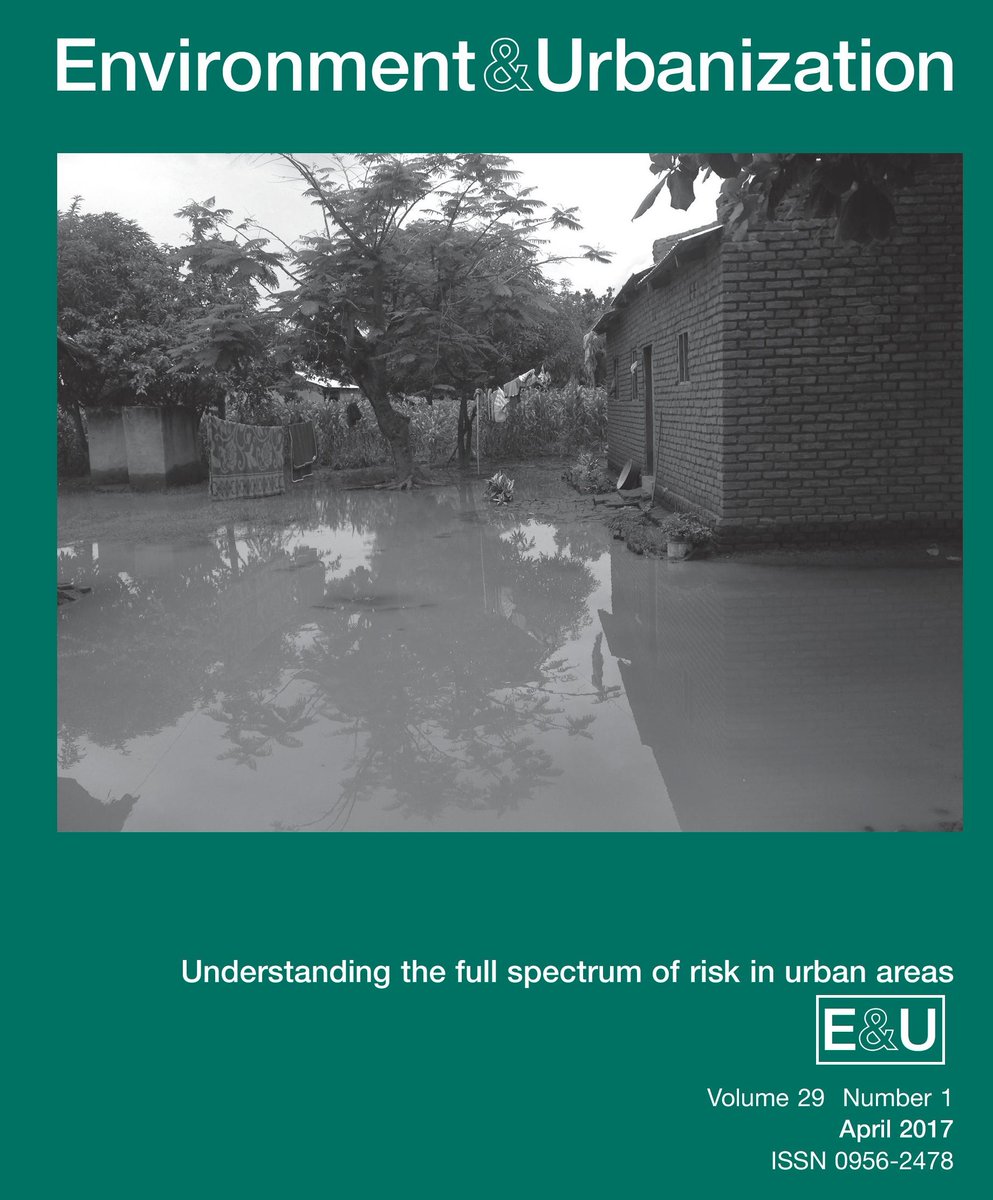
This issue of Environment and Urbanization is on the full spectrum of risk in urban areas of the global South and their contribution to premature death, serious injury, illness or impoverishment. The papers show the large spectrum of risks from infectious and parasitic diseases, pollution and physical hazards. “Small” disasters and every-day hazards that often receive less attention than disasters actually pose greater risks, especially among low-income groups and those living in informal settlements. City-specific studies in this issue explore the nature and measurement of local risks, in Karonga, Malawi; Niamey, Niger; Bandung, Indonesia; Bangkok, Thailand; and Nairobi, Kenya. The issue also includes papers that interrogate the concept of risk resilience, calling for greater attention to rights, justice, and concrete community-led action. The papers propose new directions for classifying and collecting information on risks, which is the first step towards reducing risks for the most vulnerable urban residents. Several of these papers emerged from Urban Africa: Risk Knowledge (Urban ARK), a research and capacity-building programme seeking to reduce risk in urban areas of sub-Saharan Africa.
This issue's papers on climate change in cities tackle different aspects of the urban sustainability challenge: the urban heat island; climate change, equity and the Sustainable Development Goals; and pro-poor, low-carbon urban development (looking specifically at Kolkata).
In Feedback, two papers examine livelihood issues: one is on the livelihood impacts of the Arab Spring; the other is on a janitorial job programme in Cape Town that sought to combine livelihoods with toilet maintenance. Other papers propose frameworks for understanding current urban conditions: household energy needs in Thai cities, and micro-inequalities more generally. And several papers look to the future. One outlines what is needed for genuine gender transformation in a global urban agenda, while another explores the potential of self-financing urban development to reduce inequality and increase local involvement in urban policy. Two papers provide alternative predictions of which cities are likely to be the largest in the next century.
View full contents and access papers in this issue
October 2016: Urban livelihoods
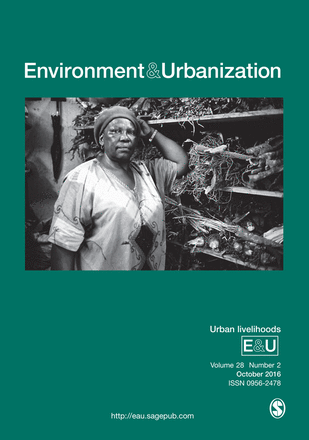 The network Women in Informal Employment: Globalizing and Organizing (WIEGO) guest edited this issue, drawing on its experience of working since 1997 to improve the situation of the working poor in the informal economy. The themed papers in this issue therefore focus on informal employment in particular sectors and contexts, providing both comprehensive surveys of the related literature and grounded accounts of the working lives of specific groups. The occupational groups span street vendors, waste pickers, fisherwomen, and home-based workers.
April 2016: From the MDGs to the SDGs and Habitat III
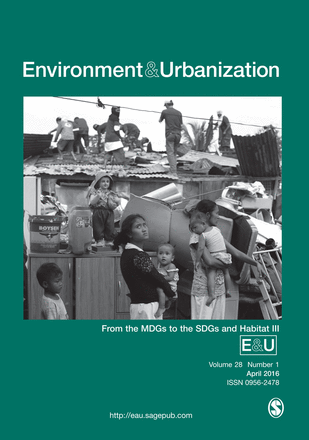 In 2015, the Millennium Development Goals (MDGs) were replaced by the Sustainable Development Goals. And the UN Conference Habitat III to be held in October 2016 is meant to agree on “the new urban agenda” through which these goals are to be met. This issue of Environment and Urbanization looks critically at whether the much-needed changes in urban policy and practice will be achieved. It includes papers on:
- what inclusive urbanization actually means (and whether governments will act on it)
- the rapidly expanding urban agenda but with diminishing expectations for Habitat III
- the return to large, heavily subsidized and inappropriate mass housing
- the high rates of return that can come from good urban policy
- whether we need a new urban agenda for refugees/those displaced by conflict
- whether urban centres are taken seriously in the post-2015 Agenda
- indicators that allow cities to measure and monitor their SDG performance
- missing the MDG targets for water and sanitation in urban areas
- getting public and environmental health back into urban agendas
The papers on climate change in cities examine how vulnerability and adaptation are shaped by particular spatial contexts, community practices and political decisions in Dakar, Brazilian municipalities and Rio Branco.
Papers in Feedback describe the varied responses to inadequate services and infrastructure in urban areas, with a particular focus on informal settlements. These encompass young entrepreneurs providing critical sanitation services in Kisumu, urban poor federations building housing in Mumbai, and wetland communities adapting to flood risk in Kampala. Other papers examine the effectiveness of communal toilets in Kisumu, the decline of rental housing in Mumbai, and how the Ahmedabad government’s infrastructure projects not only displaced large numbers of low-income groups, but also passed on costs as well as maintenance and management responsibilities to those in the resettlement sites.
View full contents and access papers in this issue
October 2015: Sanitation and drainage in cities II
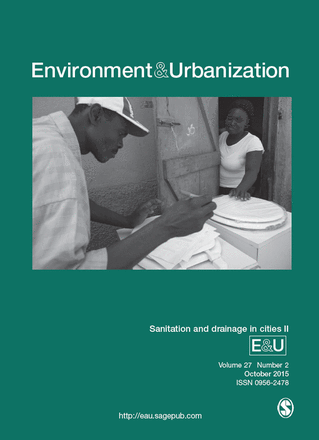 In light of the failure to reach the sanitation target of the Millennium Development Goals (MDGs), this issue of Environment and Urbanization explores methodological, political, financial and other challenges to measuring and improving sanitation in urban areas.
This is the second 2015 issue of Environment and Urbanization to cover sanitation and drainage. Only one of the countries covered in these two issues met its MDG target. Some even saw their urban populations’ access to improved sanitation decline from the start of the reporting period in 1990. These papers are therefore very timely given the global discussion around how to ensure the stronger performance of the Sustainable Development Goals (SDGs). However, as the editorial points out, it will be essential to establish a robust monitoring system to actually implement the SDGs.
The themed papers in this issue cover Maputo (Mozambique), Johannesburg (South Africa), Mumbai and Chandigarh (India), Ulaanbaatar (Mongolia), Dar es Salaam (Tanzania), Lusaka (Zambia), Cap Haitien (Haiti), Shanghai (China) and Accra (Ghana). Topics covered include the realities and limitations of market-driven sanitation services; the interplay of politics and history in determining the context of urban sanitation; the role of tenure in sanitation decisions; and innovations in the management of waste. Several papers address the prevalence of communal sanitation in poor urban environments, despite shared sanitation not falling under the definition of “improved” sanitation. The papers also highlight that progress in extending sanitation access has been highly uneven.
The papers on climate change provide examples of positive steps toward resilience. These cover Uganda (where residents of informal settlements are engaging in participatory resilience building) and Indonesia (where two cases of adaptation in riverbank settlements are compared).
The feedback section features a paper documenting how urban poor leaders have set their own national poverty lines. Other papers explore climate and health in informal urban settlements and uneven disaster risk in Tigre, Buenos Aires.
Articles on:
- EDITORIAL: Will urban sanitation “leave no one behind”?
- Development and application of a methodology to assess sanitary risks in Maputo, Mozambique
- Using tenure to build a “sanitation cityscape”: narrowing decisions for targeted sanitation interventions
- State-led versus community-initiated: stormwater drainage and informal settlement intervention in Johannesburg, South Africa
- Opportunities and limits to market-driven sanitation services: evidence from urban informal settlements in East Africa
- Sites of entitlement: claim, negotiation and struggle in Mumbai
- Evaluation of a closed-loop sanitation system in a cold climate: a case from peri-urban areas of Mongolia
- Reworking the relation between sanitation and the city in Dar es Salaam, Tanzania
- The role of power, politics and history in achieving sanitation service provision in informal urban environments: a case study of Lusaka, Zambia
- The urban sanitation conundrum: what can community-managed programmes in India unravel?
- User perceptions of and willingness to pay for household container-based sanitation services: experience from Cap Haitien, Haiti
- Everyday practices of sanitation under uneven urban development in contemporary Shanghai
- Urban sanitation in India: key shifts in the national policy frame
- Solid waste management and sustainable cities in India: the case of Chandigarh
- Public toilets and their customers in low-income Accra, Ghana
Climate Change in cities
- Local and participatory approaches to building resilience in informal settlements in Uganda
- A tale of two cities: comparing alternative approaches to reducing the vulnerability of riverbank communities in two Indonesian cities
Feedback
- How urban poor community leaders define and measure poverty
- Climate and health in informal urban settlements
- Present-day capitalist urbanization and unequal disaster risk
View full contents and access papers in this issue
April 2015: Sanitation and drainage in cities
October 2014 issue: Conflict and violence in 21st century cities
This discusses the dramatic increase in conflict in urban areas and a paradigm shift in the approach to managing violence. Violence in cities across Africa, Asia and Latin America can no longer be seen as a problem which can be overcome through development programmes. It also provides new insights which could help those affected to manage violence on a day-to-day basis, as well as empower them to question and address the causes.
It includes papers on: urban violence and displacement of Colombian migrants to London; partnerships for women’s safety in the city; gangs in global perspective; violence in post-invasion Kabul and in post-war Juba; exploring insecurity, violence and resilience in the fragile city; the “humanitarianization” of urban violence; visible and invisible violence in Santiago; and knowledge transfer on urban violence: from Brazil to Haiti.
The Feedback section has four case studies on water governance – in eThekwini Municipality (South Africa), Guarulhos (Brazil), and Lima and Arequipa (Peru). It also has papers reflecting on urban citizenship, impoverishment and inequality in Delhi, urban fantasies and emerging realities from Luanda, policy-relevant differences in slum types and adaptation strategies in Bangalore and addressing disaster risk in a small town in Malawi
View full contents and access papers in this issue
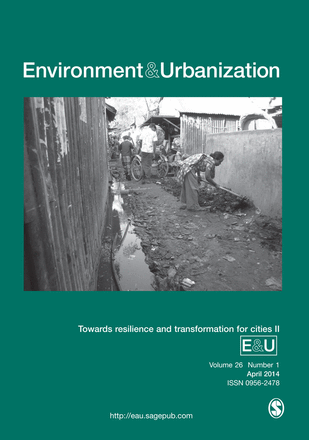
April 2014 issue: Towards resilience and transformation for cities II
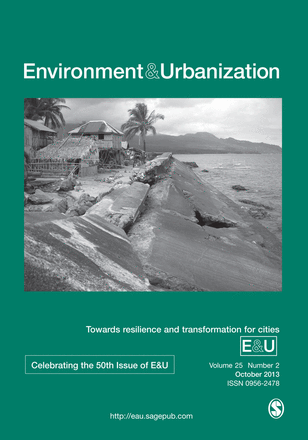
October 2013 issue: Towards resilience and transformation for cities
View full contents and access papers in this issue
April 2013 issue: Gender and Urban Change
 Urbanization is often associated with greater independence and opportunity for women – but also with high risks of violence and constraints on employment, mobility and leadership that reflect deep gender-based inequalities. These issues are explored in the April 2013 issue of Environment and Urbanization, which is on Gender and Urban Change. It includes papers on: where and when urban women enjoy advantages over their rural counterparts; community savings schemes that build women’s leadership and support upgrading; how transport planning still fails to respond to women’s travel needs; how urban contexts can reduce gender-based violence, although often they can increase it; how income and ideology influence women’s decision-making in rural and urban areas in Nicaragua; the changes in women’s participation in labour markets in Dhaka and the tensions this can generate within households; what was learnt from a project working with girls and boys with disabilities in Mumbai; and the particular roles of women in seeking to get better services for their low-income/informal neighbourhoods in Bengalaru.
The editorial which has a summary of the key issues covered is open-access at http://eau.sagepub.com/content/25/1/3.full
This issue also has two papers on climate change, which are a detailed benefit-cost analysis applied to Durban; and the different responses of low-income tenants and squatters to adaptation in Khulna. Other papers include: the limitations in the Indian government’s Basic Services for the Urban Poor Programme; the politics of non-payment for water in Manila’s low-income communities; community-managed reconstruction in Old Fadama (Accra) after a fire; developing a solid waste collection service in informal settlements in Managua; how well-connected individuals control land allocations and water supply in an informal settlement in Dhaka; and an assessment of provision for water, sanitation and waste collection in two informal settlements in Kumasi.
View full contents and access papers in this issue
October 2012 issue: Addressing poverty and inequality – new forms of urban governance in Asia
This issue has seven papers that consider the design and implementation of an ambitious Asia-wide initiative to support community-driven citywide upgrading − the Asian Coalition for Community Action (ACCA). Starting in 2009, this programme has supported 950 grassroots initiatives in 165 cities in 19 Asian nations and has set up Urban Poor Funds in more than 100 cities to help continue such support. These initiatives were also to encourage and support communities to learn from each other and to work together to get the engagement and support of city governments for citywide upgrading.
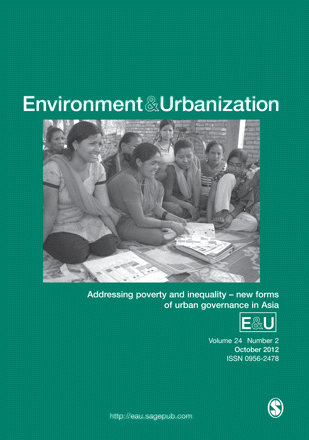
The papers consider different aspects of ACCA, including how it evolved and how it uses finance to support community action and engagement with local governments (and the setting up of national and city Urban Poor Funds). Also, how it supports collective processes within low-income communities, including: collective information collection (settlement mapping, citywide surveys); collective definition of problems and search for shared solutions; and bringing together savings networks. One paper presents the perspectives of two community leaders from the Philippines on change-making by communities, and who helps or hinders them; another explains how the community initiatives are being assessed by peers (those engaged in comparable community initiatives) rather than outside ”experts” who have no experience of living in informal settlements on very low incomes; and another discusses the role of community architects and other professionals working in grassroots-directed initiatives.
Five papers are on climate change and cities: lessons from practice in Asia for building climate change resilience; addressing climate change in New York City; incorporating cities into the post-2012 climate change agreements; Ibadan’s vulnerability to wind hazards; and assessing climate change adaptation for water and sanitation providers.
Papers in Feedback include: why enumeration counts; the health and social implications of living in a non-notified slum in India; financing urban agriculture; and mapping and enumerating informal Roma settlements in Serbia.
View full contents and access papers in this issue
April 2012 issue: Documenting the undocumented
 The April 2012 issue is on Mapping, enumerating and surveying informal settlements and cities. It includes case studies from Ghana, Kenya, India, Namibia, South Africa, Tanzania and Uganda of how the residents of informal settlements worked with grassroots leaders and local NGOs to map and survey their settlement. These discuss how this helped to develop better relations with local government and in some cases partnerships. Also included is an account of how community-based enumerations started in India, a discussion of the role of architects in community mapping and planning, and a paper reviewing the environmental effects of informal urban expansion in Xalapa.
On climate change adaptation, there are papers on exploring ecosystem-based climate change adaptation in Durban, assessing flood protection measures in Dhaka and drawing in private finance to develop resilient cities.
It also has papers on revisiting a rehabilitation programme, 10 years after the earthquake in Gujarat, the fragmentation of urban landscapes worldwide, socioeconomic characteristics of informal dwellers in South Africa , assessing the performance of constructed wetlands in Thailand, the transformation of “villages in the city” in Guangzhou (China) and migration and mobility in a rapidly changing small town in Ethiopia.
View full contents and access papers in this issue